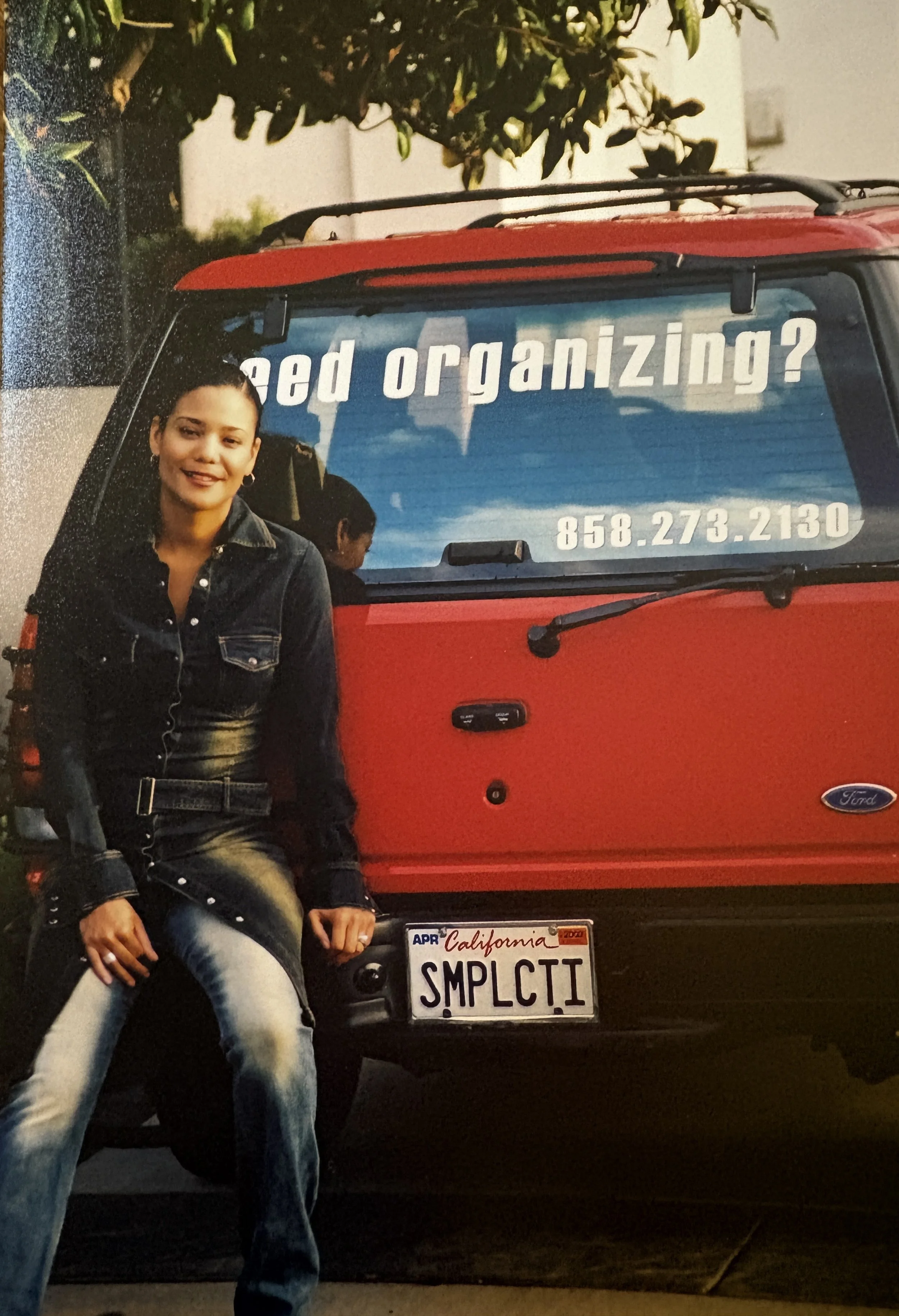
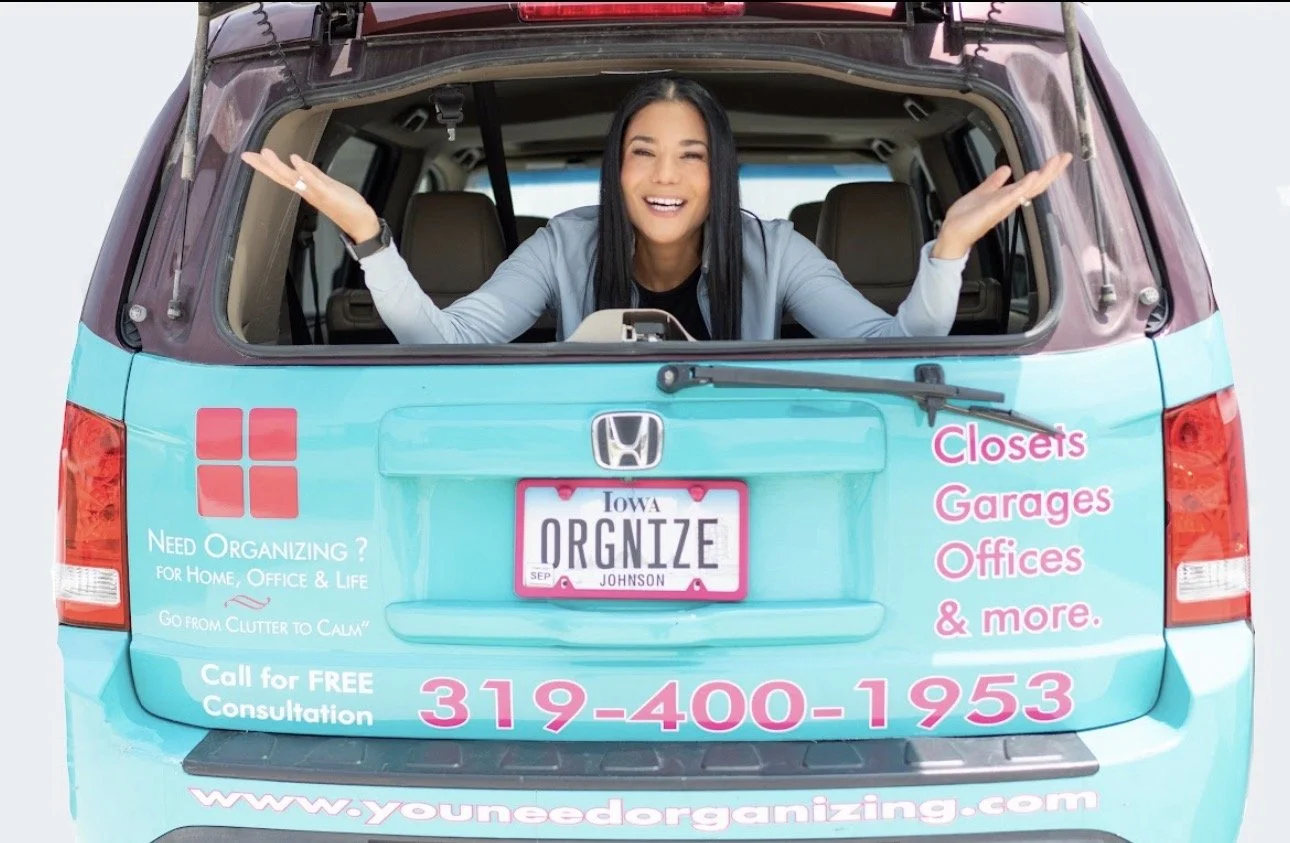
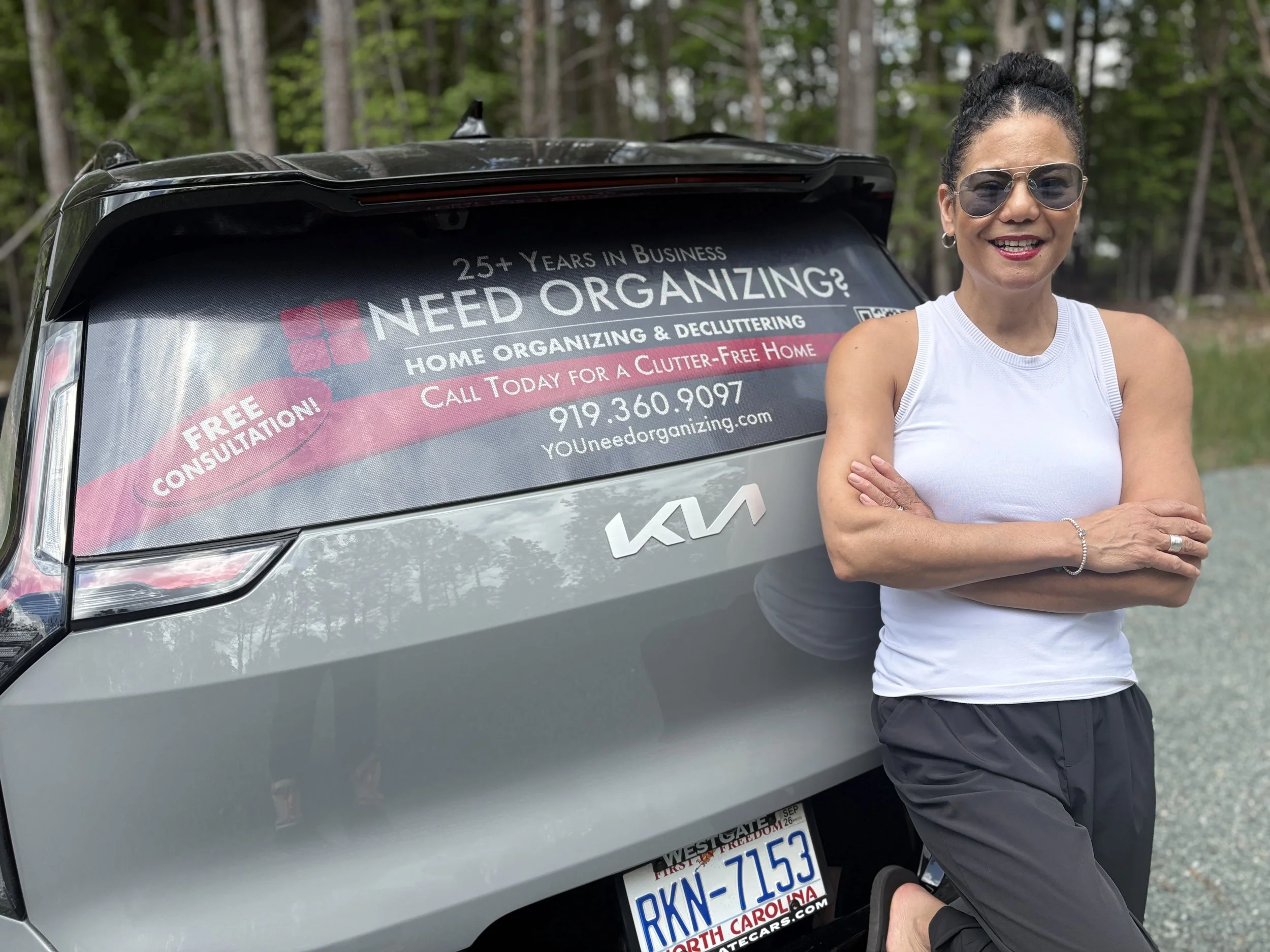
The photos below represent different chapters of my life and business. California. Iowa. North Carolina. There's also a Florida chapter that isn't pictured. Through all the moves, new beginnings, changing homes, and evolving organizing trends, a few lessons have remained surprisingly consistent.
When I look at these photos, I don't just see the vehicles that carried me from one client to the next.
I see chapters of my life.
One photo represents the early days of starting my organizing business in California. Another reminds me of rebuilding and growing my business in Iowa. Today, I'm helping clients create calmer, more functional homes here in North Carolina.
Along the way, there was also a chapter in Florida. While I don't have a vehicle photo from that season, it was another important stop in a journey that has now spanned four states and more than 25 years of helping people declutter, organize, and create homes that function better for their everyday lives.
Over the last 25+ years, a lot has changed.
Homes are designed differently. Storage products are everywhere. Social media is filled with organizing advice. Clients are juggling busier schedules, growing families, downsizing decisions, work-from-home spaces, and more demands than ever before.
Yet after all these years, I've found that the most successful organizing projects still come back to the same three principles.
Whether I'm organizing a garage, bedroom, office, playroom, closet, pantry, or an entire house, these are the methods I rely on again and again.
1. Create Space Before You Create Systems
One of the biggest misconceptions about organizing is that it starts with bins.
It doesn't.
Before labels, containers, or storage solutions, I focus on creating visual space.
Most often, that means clearing the floor first. If the floor is already clear, I start on one side of the room and gradually work my way across.
This approach is especially helpful for people who feel overwhelmed by clutter or struggle with focus and distractions. Instead of looking at an entire room and wondering where to begin, you're only focusing on one manageable section.
I don't usually pull everything out at once. In fact, doing that can make a space feel even more overwhelming.
Instead, I create progress in stages.
The moment a client can see a clear floor, an empty corner, or a cleaned-off section of a room, something shifts. They can breathe. They can focus. They can begin to visualize what their space could become.
I've learned over the years that visible progress creates momentum.
And momentum creates results.
2. Make One Decision at a Time
After years of working with clients, I've learned that organizing is rarely about moving things.
It's about making decisions.
Once we've created some space, I like to have clients stay in one area. They might sit at a desk, on a couch, or near the space we're working in.
Then I bring items to them.
One basket.
One bag.
One category.
One decision at a time.
This helps reduce overwhelm and prevents distractions from pulling attention in ten different directions.
The real work of decluttering isn't lifting or sorting. It's deciding.
Should I keep this?
Donate it?
Recycle it?
Move it?
Let it go?
Every item requires mental energy.
When an entire room is spread out at once, people often become exhausted before meaningful progress is made. But when we're working through one basket at a time, the process feels manageable.
The decision to keep something or release it ultimately belongs to the owner. My role is to provide guidance, ask the right questions, and help clients move forward without feeling stuck.
After 25 years, I've learned that organizing is often less about stuff and more about reducing mental clutter.
3. Complete the Cycle
This may be the most important organizing rule I follow.
If the donation bags are still sitting in the garage for six months, the project isn't finished.
If the recycling is stacked by the back door, the project isn't finished.
If the trash bags are still waiting to be taken out, the project isn't finished.
Whenever possible, I help clients complete the process the same day.
Donations get donated.
Recycling gets recycled.
Trash gets removed.
Creating closure matters.
Even if we've only organized for two or three hours, completing that final step gives clients a sense of accomplishment and allows them to immediately enjoy the progress they've made.
Every organizing project deserves a beginning, a middle, and an end.
What 25+ Years of Organizing Has Taught Me
I've organized in four different states, worked with thousands of spaces, and watched organizing trends come and go.
Matching bins were popular.
Then clear containers became the trend.
Pinterest changed how people approached organizing.
Social media introduced endless organizing hacks and products.
Some of those ideas are helpful.
Some are not.
But what helps people make real progress has remained surprisingly consistent.
Create space before creating systems.
Make one decision at a time.
Complete the cycle by removing what no longer belongs.
These principles work whether you're tackling a cluttered garage, overstuffed closet, chaotic playroom, crowded home office, or an entire household that's accumulated years of life.
The homes have been different.
The states have been different.
The vehicles have certainly been different.
But people are surprisingly similar.
Most people aren't struggling because they lack storage bins.
They're struggling because they're overwhelmed, busy, distracted, or simply unsure where to start.
Twenty-five years later, these are still the first lessons I bring into every organizing project.
Some things change.
Life changes.
Homes change.
Seasons change.
Good organizing principles don't.